allwyn sazka – nové trendy v roce 2026
allwyn sazka není jen hazard, ale i společenská aktivita. Moderní platformy umožňují snadné sdílení allwyn sazka výhry s přáteli.
See also:
- Výhody použití allwyn sazka sportka v online casinu
- Kde najít nejlepší allwyn sazka aplikace?
- Bonusy a promo nabídky v sazka casino: podmínky, které musíte znát
- Uživatelské prostředí a herní lobby sazka casino
- Tipy pro nákup vstupenek s allwyn sazka sportka
- Platební metody pro vklady a výběry v sazka casino
- Často kladené otázky o allwyn sazka aplikace
- Limity vkladů a sázek v sazka casino
Výhody použití allwyn sazka sportka v online casinu
Provably fair is a mechanism used primarily in online gambling and cryptographic systems to ensure that the outcomes of random events are not manipulated by the operator. The concept relies on cryptographic hash functions, which are one-way functions that produce a fixed-size output from any input. In a typical provably fair system, the process involves three key elements: a server seed, a client seed, and a nonce. The server seed is generated by the operator and kept secret initially, while the client seed is chosen by the user or provided by the client application. The nonce is an incrementing counter that changes with each game round. To generate an outcome, the operator combines these three inputs and hashes them, producing a result that determines, for example, the roll of a dice, the shuffling of a deck, or the spin of a slot machine. Crucially, before the game begins, the operator publishes a hash of the server seed, committing to it without revealing it. After the game, the operator reveals the original server seed, allowing the user to verify that the outcome was generated using the committed seed. The user can then recompute the hash using the same inputs to confirm that the outcome matches. This process ensures that the operator cannot change the outcome retroactively, as that would require finding a different server seed that hashes to the same commitment, which is computationally infeasible. The client seed can be changed by the user to prevent the operator from precomputing outcomes for a fixed seed. Nonces ensure that each game round produces a unique outcome even if the seeds are reused. Many online casinos and gambling platforms have adopted provably fair systems to build trust with players. For instance, in a dice game, the outcome might be computed as (hash mod N) + minimum, where N is the number of possible outcomes. The user can verify each roll independently. The security of provably fair relies on the collision resistance and preimage resistance of the hash function. Common hash functions used include SHA-256, which is widely regarded as secure. However, the system is only as fair as the implementation; if the operator can choose the client seed or nonce, they might have some control. Therefore, best practices recommend that the client seed be provided by the user or generated client-side. Additionally, the nonce should be deterministic and sequential. One potential vulnerability is if the operator reuses server seeds across multiple users or games, but this can be mitigated by generating a new server seed periodically. Another important aspect is transparency: the source code for verification should be open and auditable. Many platforms provide JavaScript or other tools that allow users to download and run verification locally. The concept of provably fair extends beyond gambling to any application requiring verifiable randomness, such as lottery systems, giveaways, and cryptographic key generation. It combines the principles of commitment schemes, where a value is committed without revealing it, and then later revealed for verification. The mathematical foundation lies in the difficulty of inverting a hash function. To illustrate, suppose the server seed is "abc123" and the client seed is "def456" with nonce 1. The operator hashes the concatenation (or a more complex combination) to get a string like "5e884898da28047151d0e56f8dc6292773603d0d6aabbdd62a11ef721d1542d8". This hash value is then converted to a number, perhaps by taking the first few bytes, and mapped to a game outcome. After the game, the operator reveals "abc123". The user can then compute the same hash and verify that it matches the published outcome. If the operator tried to cheat by using a different server seed, they would have to find a preimage that produces the same commitment hash, which is computationally impossible. The term "provably fair" was popularized by Bitcoin-based gambling sites in the early 2010s, such as SatoshiDice. Since then, it has become a standard feature advertised by many crypto casinos. However, not all implementations are equally secure; users should be wary of sites that do not allow client seeds to be set arbitrarily. Moreover, some systems incorporate additional entropy from the blockchain or external sources. A common variation is the use of a "secret" that is revealed after a round, similar to the concept of a cryptographic commitment.
Kde najít nejlepší allwyn sazka aplikace?
Expanded text is a concept that serves as a cornerstone in the fields of natural language processing, content creation, and data augmentation. The term itself might seem straightforward, but its implications are vast and multifaceted. When we talk about expanded text, we refer to the process of taking a brief initial expression—a word, a phrase, or a short sentence—and systematically enlarging it into a longer, more detailed version without losing the core meaning. This expansion can be achieved through various techniques, each with its own set of rules and applications. For instance, in the context of machine learning, expanded text is often used to generate training data for models that need to understand and produce longer coherent passages. The expansion might involve adding synonyms, elaborating on implicit details, or inserting background information that makes the text more self-contained. One common method is lexical expansion, where a single word is replaced with a phrase that encapsulates its meaning more thoroughly. Take the word ‘run.’ A simple lexical expansion could turn it into ‘engage in a rapid movement of the legs such that both feet leave the ground at intervals.’ This not only clarifies the action but also provides a more vivid description. Another method is syntactic expansion, where the structure of the sentence is elongated by adding clauses, modifiers, or additional sentences. For example, ‘The cat sat on the mat’ could become ‘The tabby cat, with its silky fur and alert green eyes, chose to settle itself comfortably on the worn-out doormat that was adorned with a faded floral pattern.’ Here, the expansion adds visual and contextual details, making the scene more engaging. Semantic expansion goes deeper by incorporating related concepts, causal relationships, or implications. The phrase ‘He felt sad’ might expand to ‘He experienced a profound sense of melancholy, triggered by the memory of his lost youth, which manifested as a heavy weight in his chest and an urge to sit alone in the dim light of the evening.’ This type of expansion not only adds words but also builds a narrative around the emotion. In practical applications, expanded text is crucial for creating comprehensive reports from brief notes, generating longer articles from summaries, or even personalizing content for different audiences. For example, a journalist might receive a briefing note that says ‘Stock market drops due to inflation fears.’ An expanded version would include the percentage drop, the industries most affected, expert quotes, and historical context. Similarly, in education, a teacher might use expanded text to elaborate on a textbook definition, incorporating real-world examples and interactive elements. The process of expansion is not merely about adding words arbitrarily; it requires a deep understanding of the source material and the target audience. The same short text can be expanded in multiple ways depending on the intended use. For creative writing, expansion might focus on sensory details and emotional depth; for technical documentation, precision and clarity are paramount. Placeholders, when present, denote where specific data should be inserted, such as names, dates, or statistics. In automatic text expansion systems, these placeholders are replaced with actual values to produce customized outputs. The challenge lies in maintaining coherence and relevance throughout the expanded text, ensuring that each new sentence builds logically on the previous one. Modern neural network models, particularly those based on transformer architectures, have shown remarkable ability to generate plausible expansions. They learn patterns from vast corpora and can produce text that is often indistinguishable from human writing. However, they also require careful training to avoid hallucinations—false or irrelevant information. Another aspect of expanded text is its role in text simplification, which is essentially the reverse process. While expansion adds complexity and length, simplification condenses and clarifies. Both are important for accessibility, allowing content to reach people with varying levels of literacy or expertise. In the business world, expanded text is used to turn bullet points in presentations into full paragraphs for reports, or to convert customer feedback comments into detailed case studies. The technique also aids in search engine optimization, where longer, more informative content tends to rank higher. Moreover, expanded text can be a valuable tool for language learners, as it exposes them to varied vocabulary and sentence structures. By reading expansions of familiar words, they can internalize new expressions in context. Ethical considerations arise when expanded text is used to misrepresent information, such as padding a document to meet length requirements without adding substance, or generating misleading claims. Therefore, it is essential to use expansion responsibly, ensuring that every added word contributes value. The method of expansion often starts with identifying the key entities and relationships in the original text. These become anchors for the expansion. For instance, if the original text is ‘The meeting was productive,’ the key entities are ‘meeting’ and ‘productive.’ An expansion would first define what the meeting was about, who attended, and then specify what made it productive—perhaps decisions made, milestones achieved, or positive feedback. This structured approach ensures that the expansion is focused and informative. Additionally, the use of transitions and connective tissue helps to weave the expanded sentences into a smooth narrative. Words like ‘furthermore,’ ‘in addition,’ ‘consequently,’ and ‘for example’ guide the reader through the added information. Another technique is to incorporate hypothetical scenarios or analogies to clarify abstract concepts. For example, expanding ‘Honesty is important’ might include an analogy like ‘Honesty in communication is akin to a clear window through which trust can shine; without it, the view becomes distorted and relationships suffer.’ Such analogies not only lengthen the text but also enhance comprehension. In digital marketing, expanded text is used to create product descriptions that tell a story rather than just listing features. A short tagline like ‘Comfortable shoes for all-day wear’ can become a detailed description of the shoe’s materials, design process, and customer testimonials, potentially increasing conversion rates. The effectiveness of expanded text depends on the skill of the writer or the sophistication of the algorithm. For AI-based expansion, pretrained language models have been fine-tuned on specific domains to generate appropriate expansions. However, they still require human oversight to ensure accuracy and tone. The future of expanded text lies in interactive systems that can adjust expansions in real-time based on user feedback, creating a dynamic reading experience. As we move towards more personalized content, expanded text will become even more ubiquitous, bridging the gap between brevity and depth. In conclusion, expanded text is not merely a longer version of something; it is a deliberate, crafted extension that enriches understanding, provides context, and engages the reader. Whether used in journalism, education, business, or technology, it serves a vital function in communication. The ability to expand text effectively is a skill that combines linguistic knowledge, subject expertise, and empathy for the audience. As we continue to generate and consume vast amounts of information, the art and science of text expansion will remain indispensable.
To delve further, consider the role of expanded text in legal documents, where precision is critical. A short clause like ‘The tenant shall pay rent on time’ expands to include specific dates, grace periods, penalties for late payment, and methods of payment. This expansion prevents ambiguity and potential disputes. In medical contexts, a diagnosis note such as ‘Patient has hypertension’ can be expanded to include blood pressure readings, medication history, lifestyle factors, and recommended treatment plans. Such expansion supports better patient care and documentation. The expansion process also benefits from ontologies and knowledge graphs, which provide structured relationships between concepts. For instance, expanding ‘The company launched a new product’ might involve querying a knowledge base for the company’s history, product features, market conditions, and competitor analysis. This data-driven expansion ensures factual accuracy and relevance. Another nuance is the handling of implicit information: often, short texts rely on shared knowledge that not all readers possess. Expansion makes this implicit knowledge explicit, broadening accessibility. For example, a historical reference to ‘the fall of the Berlin Wall’ can be expanded to explain the Cold War context, the events of November 9, 1989, and the subsequent reunification of Germany. This expansion is particularly useful for educational materials aimed at audiences unfamiliar with the topic. Moreover, in multilingual settings, expanded text can serve as a bridge for translation, ensuring that cultural nuances are preserved. A short metaphor in one language might require a longer explanation in another to convey the same impact.
Bonusy a promo nabídky v sazka casino: podmínky, které musíte znát
- Kč500 bonus za registraci
- 100% až Kč200
- 50% bonus až Kč200
- 40x protočení do 7 dnů
- 50x sázení
- 30x obrat za 30 dní
Uživatelské prostředí a herní lobby sazka casino
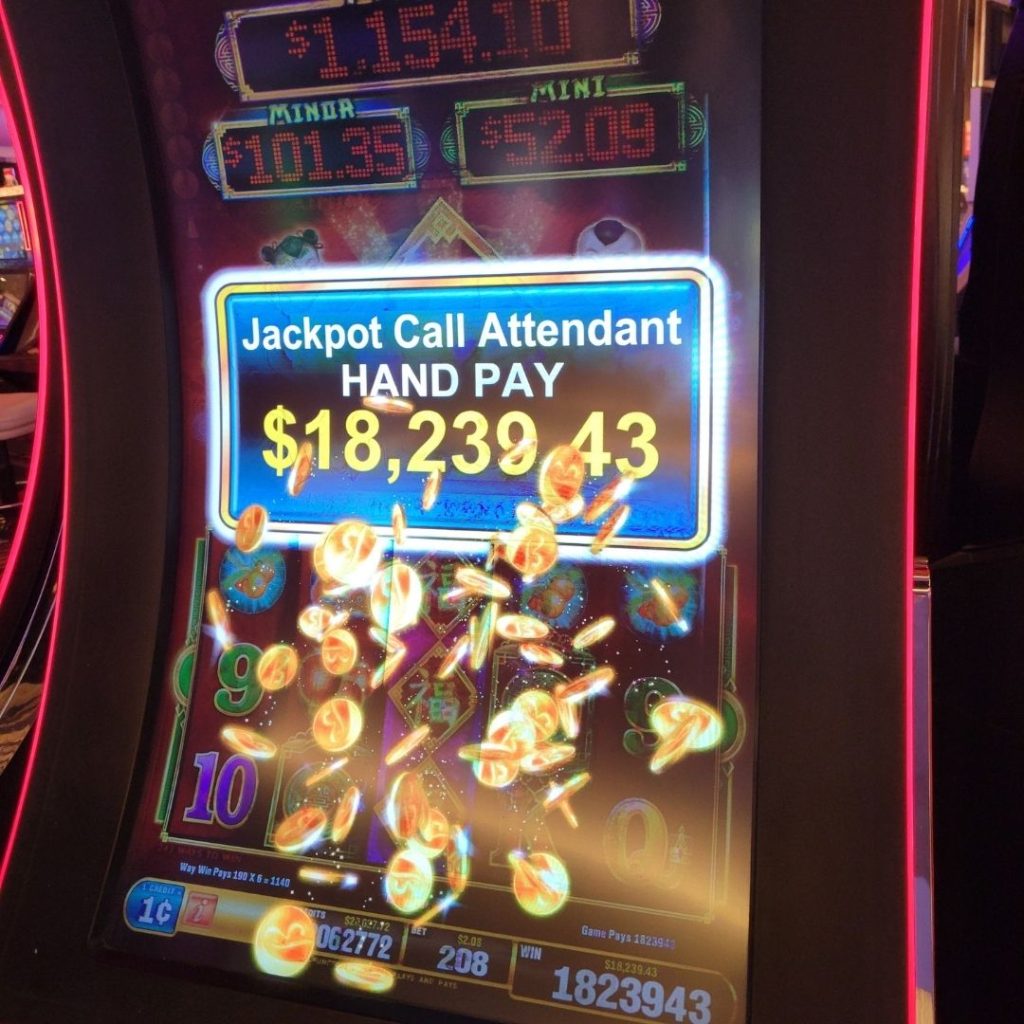
online casino seznam 2026 — s výhodnými podmínkami
Tipy pro nákup vstupenek s allwyn sazka sportka
Platební metody pro vklady a výběry v sazka casino
- Neteller
- Skrill
- Visa
- PaysafeCard
- Mastercard
Často kladené otázky o allwyn sazka aplikace
Jak mohu hrát bingo a loterii v sazka casino?
Stačí se zaregistrovat a vložit vklad. Poté si vyberte hru z nabídky binga nebo loterie.
hrací automaty zdarma kajot — hry od předních vývojářů | kajot casino
Jaké jsou šance na výhru v loterii u sazka casino?
Šance závisí na konkrétní hře. U loterie jsou obvykle uvedeny v herních pravidlech.
blackjack kasino 2026 — návod pro začátečníky
hrací automaty zdarma kajot 81 — jackpotové hry a sloty | kajot casino
Mohu hrát bingo a loterii na mobilním zařízení?
Ano, sazka casino je plně optimalizován pro mobilní zařízení, takže můžete hrát odkudkoli.
Jaké jsou minimální vklady pro bingo a loterii u sazka casino?
Minimální vklad je Kč11. Tato částka se liší podle platební metody.
Je sazka casino licencován a regulován?
Ano, sazka casino vlastní licenci od Ministerstvo financí ČR, což zaručuje bezpečné a spravedlivé hraní.
Zkušení hráči doporučují prověřit pověst allwyn sazka podle recenzí.
Limity vkladů a sázek v sazka casino
Hazardní hry jsou určeny pouze osobám starším 18 let. Hrajte zodpovědně a berte hraní jako formu zábavy, nikoli jako způsob, jak vydělat peníze nebo se dostat z finančních potíží. sazka casino doporučuje stanovit si osobní limity na čas a peníze, které jste ochotni utratit. V případě, že cítíte, že vaše hraní přestává být kontrolované, můžete využít možnost dobrovolného vyloučení prostřednictvím Rejstříku vyloučených osob (RVO), který spravuje Ministerstvo financí ČR. Pro pomoc a podporu se obraťte na specializované poradny nebo linky důvěry pro problémové hráče.
casino praha 2026 — co očekávat při návštěvě